If We Built Sourcing for AI Today, What Would It Look Like?

By
Kevin Frechette
September 24, 2026

There’s a lot of certainty in the way people talk about AI right now.
Every platform has an agent. Every workflow is becoming autonomous. Every demo seems to promise that AI is about to fundamentally change the way we work.
I believe that change is happening. But I also think we need to be realistic about where we are today.
No one’s nailed it. There’s no silver bullet.
Enterprise teams are in what I think of as the messy middle: somewhere between the software and workflows we’ve relied on for years, AI that helps us complete individual tasks, and a future where agents can actually coordinate and execute meaningful work on our behalf.
That’s especially true in procurement.
And rather than pretending we’ve already arrived at the destination, I think the more interesting question is: what should we be building toward?
AI Should Bring the Work to You
The first phase of procurement AI was largely about helping people do the same work faster.
Generate this. Summarize that. Help me build an event. Draft a supplier email.
All useful.
But the bigger opportunity is moving from AI that helps you do work to AI that brings the right work to you.
Think about how a sourcing professional starts the day today. They might have dozens of events in flight, suppliers that need follow-up, evaluations waiting for review, completed events that need to close, and new requests coming in from across the business.
Why should they have to find all of that?
The system should be able to say:
These are the five things that need your attention today, and here's what I recommend you do next.
That's a very different experience from another dashboard or another chatbot waiting for a prompt.
And it's where I think we start to see the real capacity opportunity with AI — not just doing individual tasks faster, but helping procurement teams cover significantly more work.
Procurement Doesn't Need One Super-Agent
I also don't believe the future is one giant AI assistant that magically does everything.
Sourcing is too nuanced for that.
Building an event requires a different set of rules and context than evaluating bids. Supplier strategy is different from policy enforcement. Negotiation is different from intake.
That's why I think about this more like building a team of specialized agents.
One might help turn sourcing policy into executable rules. Another could recommend strategy based on historical events. Another could transform a spreadsheet, Slack message, or call transcript into a structured sourcing event.
Others can analyze bids, model award scenarios, or prepare recommendations for different stakeholders.
The opportunity isn't to replace the sourcing team. It's to give that team a new level of leverage.
The Right Amount of Autonomy Matters
Of course, the moment AI starts taking action instead of simply making recommendations, the conversation changes.
Not every procurement decision should be autonomous.
Some decisions are predictable, repeatable, and low risk. Those are good places to start.
If an event meets clearly defined criteria, perhaps it can be sent automatically. If suppliers haven't responded within a certain timeframe, follow-up can happen without someone remembering to do it. If an award meets an organization's predefined policy, there may be cases where it can move forward automatically.
Other decisions require context, judgment, and human accountability.
That's why I don't think the goal should be maximum autonomy.
The goal is the right level of autonomy for the decision being made.
The organizations that get this right will be the ones that turn their sourcing strategy into clear policies and guardrails — allowing agents to execute confidently within them while bringing people in when judgment actually matters.
Stop Making People Translate Messy Work Into Perfect Inputs
There's another part of this that I think gets overlooked.
Enterprise work is messy.
A stakeholder doesn't always submit the perfect intake form. They send a multi-tab spreadsheet. They send a Slack message. Requirements emerge during a call. Suppliers return proposals in completely different formats.
Historically, we've forced people to clean all of that up so the software can understand it.
AI gives us an opportunity to flip that relationship.
The technology should be able to understand the way people actually work.
Drop in the spreadsheet. Give it the transcript. Let the system extract the requirements, identify what's missing, and start building the sourcing event.
And once supplier responses arrive, do the same thing in reverse: normalize the bids, surface the differences, identify anomalies, and model the potential award scenarios.
The procurement professional shouldn't be spending their time translating information between people and systems.
They should be spending it making better decisions.
This Is the Messy Middle
We're not going to move from traditional SaaS to completely autonomous procurement overnight.
Nor should we.
There will be experimentation. Different categories will require different levels of autonomy. Organizations will need to learn where AI performs well, where it doesn't, and what guardrails they need.
That's the messy middle.
And I actually think it's an exciting place to be.
Because the question is moving beyond “How can we add AI to procurement?”
It's becoming:
“If we were designing the sourcing operating model today, knowing what AI can do, how would we build it differently?”
For me, the answer starts with simplicity.
Strategy becomes policy. Agents execute and advise. Work gets prioritized automatically. Messy inputs become usable. People stay focused on the decisions where their judgment creates the most value.
The goal isn't more AI.
It's a simpler, more proactive, and more scalable way to source.
Watch the SOAR26 Session
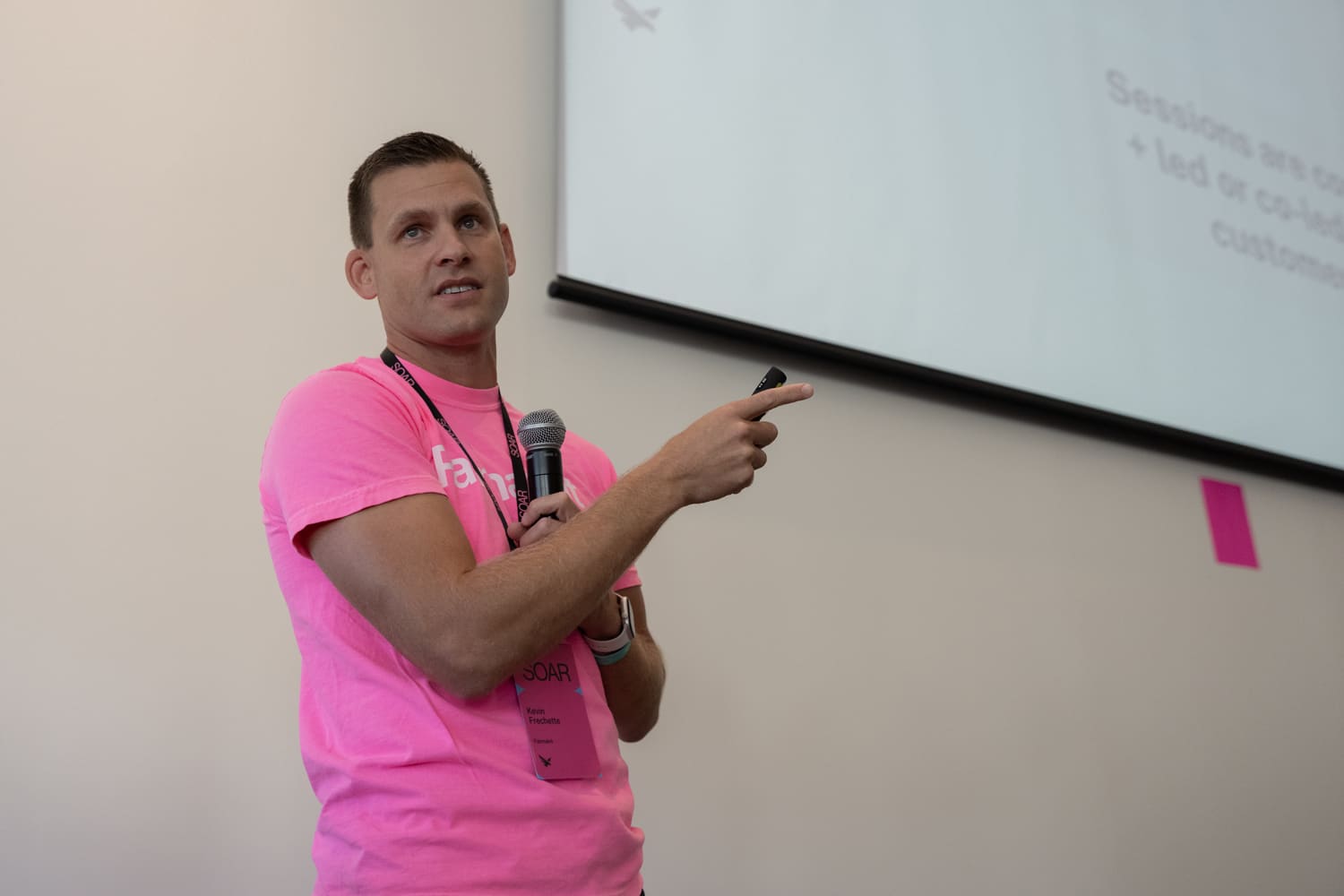
I spent some time unpacking this at SOAR26, including a look at how we're thinking about prioritized work, purpose-built sourcing agents, policy-driven automation, unstructured intake, bid analysis, and scenario modeling at Fairmarkit.
If you're thinking through what agentic sourcing could actually look like inside your organization, you can watch the full session on demand.
Watch my SOAR26 session →
One registration gives you access to the complete SOAR26 on-demand session library.