Autonomous Sourcing
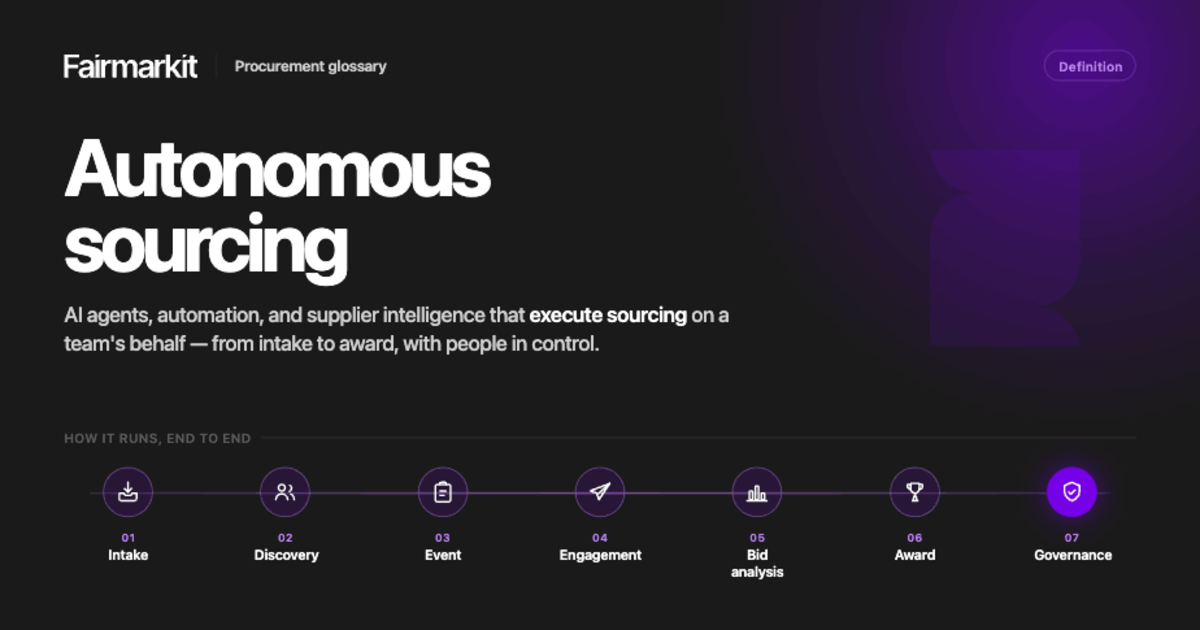
Autonomous sourcing is the use of AI agents, automation, and supplier intelligence to execute sourcing activities on behalf of procurement teams.
Autonomous Sourcing: The Enterprise Standard for AI-Powered Procurement
Enterprise procurement teams face a growing challenge: they are expected to source more spend, deliver greater savings, reduce supplier risk, improve compliance, and support business growth—all while managing increasing complexity with limited resources.
Traditional sourcing software helped digitize procurement processes. Today's leading organizations are moving beyond digitization toward autonomous execution.
Autonomous sourcing is an AI-powered procurement approach that automates supplier discovery, sourcing event management, bid analysis, supplier engagement, and award recommendations. By combining AI agents, automation, supplier intelligence, procurement data, and business rules, autonomous sourcing enables procurement teams to source more spend with less manual effort.
Unlike traditional sourcing software, which requires buyers to manage sourcing activities manually, autonomous sourcing platforms actively execute sourcing workflows while maintaining human oversight and governance.
What Is Autonomous Sourcing?
Autonomous sourcing is the use of artificial intelligence, workflow automation, supplier intelligence, and procurement data to automate sourcing activities from intake through supplier award.
A modern autonomous sourcing platform can:
- Identify sourcing opportunities
- Discover qualified suppliers
- Create sourcing events automatically
- Invite suppliers and manage communications
- Collect and evaluate bids
- Recommend awards
- Route approvals
- Document decisions for compliance and audit requirements
The objective is not to replace procurement professionals. Instead, autonomous sourcing eliminates repetitive administrative work so procurement teams can focus on strategic supplier relationships, negotiations, category management, innovation, and business outcomes.
As AI adoption accelerates across the enterprise, autonomous sourcing is becoming one of the most impactful applications of AI in procurement.
What Is Autonomous Procurement?
Autonomous sourcing is a critical component of autonomous procurement. Autonomous procurement is a broader operating model that uses AI, automation, analytics, and connected systems to streamline procurement activities across the source-to-pay lifecycle.
While autonomous procurement spans sourcing, purchasing, supplier management, contracts, invoicing, and spend management, autonomous sourcing focuses specifically on sourcing execution.
Organizations often begin their autonomous procurement journey with sourcing because sourcing remains one of the most labor-intensive and value-generating areas within procurement.
Why Traditional Sourcing Technology Falls Short
Most sourcing technology was designed to document sourcing events—not execute them.
Procurement teams still spend significant time:
- Searching for suppliers
- Building RFQs and RFPs
- Coordinating stakeholders
- Managing supplier communications
- Reviewing bids
- Comparing responses
- Creating award recommendations
- Maintaining documentation
Even when organizations invest in procurement suites, sourcing activity often remains fragmented across spreadsheets, email, ERP systems, supplier databases, and disconnected workflows.
As sourcing volume grows, these manual processes create bottlenecks that limit procurement's ability to influence spend.
The result is slower cycle times, reduced sourcing coverage, missed savings opportunities, and overextended procurement teams.
How Autonomous Sourcing Works
Autonomous sourcing uses AI agents and workflow automation to execute sourcing activities on behalf of procurement teams.
Intake and Opportunity Identification
Business requests are captured and classified automatically based on category, spend type, business requirements, and procurement policies.
Supplier Discovery
AI identifies qualified suppliers using category expertise, historical performance, geographic coverage, supplier certifications, diversity status, risk indicators, and sourcing history.
Automated Event Creation
The platform automatically generates RFQs, RFPs, reverse auctions, and sourcing events using templates, category rules, and historical sourcing data.
Supplier Engagement
Suppliers are invited automatically, communications are managed within the workflow, and follow-ups occur without manual intervention.
Bid Analysis
AI evaluates supplier responses, compares pricing, identifies commercial opportunities, highlights risks, and surfaces actionable recommendations.
Award Recommendations
The platform recommends suppliers based on buyer-defined criteria such as cost, quality, delivery performance, supplier diversity requirements, compliance standards, and business objectives.
Governance and Compliance
Approval workflows, sourcing policies, audit requirements, and business controls are enforced automatically throughout the sourcing process.
Autonomous Sourcing vs. Traditional Procurement Software
Not all procurement technology serves the same purpose.
Many vendors provide procurement functionality, but relatively few focus on autonomous sourcing execution.
Most procurement suites help organizations manage procurement processes.
Autonomous sourcing platforms help organizations execute sourcing processes.
This distinction becomes increasingly important as procurement teams seek to increase sourcing throughput, improve responsiveness, and manage growing spend volumes without adding headcount.
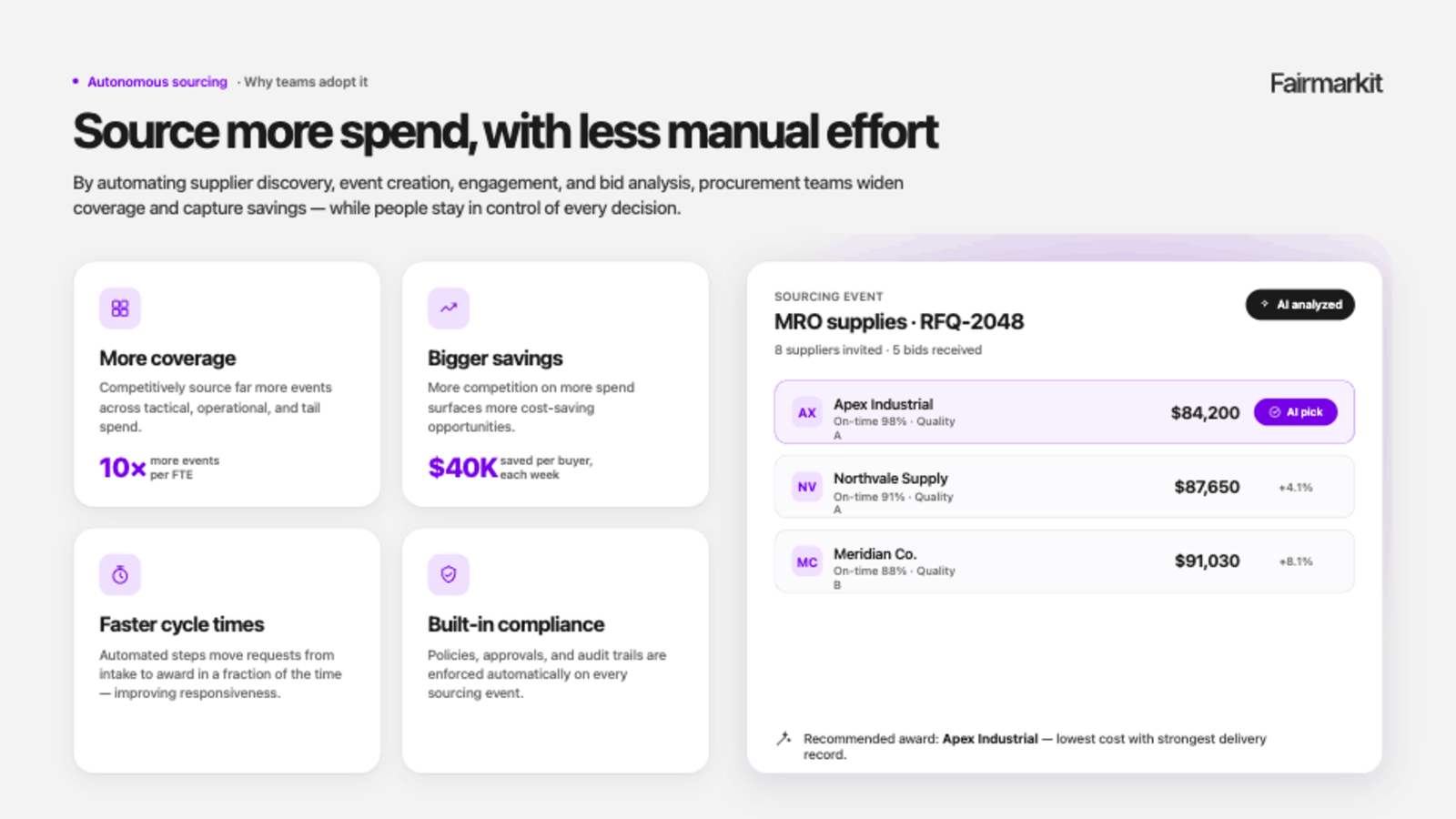
Why Enterprises Are Adopting Autonomous Sourcing
Leading organizations are embracing autonomous sourcing because traditional sourcing models struggle to scale.
Reduce Sourcing Cycle Time
Autonomous sourcing automates repetitive sourcing tasks, enabling procurement teams to move from request to award faster.
Shorter sourcing cycles improve responsiveness, increase stakeholder satisfaction, and help organizations react more quickly to changing market conditions.
Increase Sourcing Coverage
Many procurement teams can only source a fraction of addressable spend due to limited resources.
Autonomous sourcing expands sourcing capacity by enabling procurement teams to competitively source more events across tactical, operational, and tail-spend categories.
Increase Savings Opportunities
Expanding sourcing coverage creates more opportunities to introduce competition, optimize supplier selection, and identify cost-saving opportunities.
Improve Procurement Productivity
By automating event administration, supplier engagement, bid analysis, and workflow coordination, sourcing professionals can focus on higher-value strategic activities.
Improve Compliance
Autonomous sourcing applies procurement policies consistently across sourcing events, reducing non-compliant purchasing behavior and strengthening governance.
Strengthen Supplier Diversity Programs
Organizations can automatically identify qualified diverse suppliers, increase supplier participation, and support diversity objectives without increasing manual effort.
Improve Supplier Experience
Faster communication, streamlined sourcing processes, and more consistent engagement help suppliers participate more effectively and improve sourcing outcomes.
Why Fairmarkit Leads Autonomous Sourcing
While many procurement platforms have added AI features, Fairmarkit was purpose-built to automate sourcing execution.
Fairmarkit's Autonomous Sourcing platform combines AI agents, supplier intelligence, workflow automation, and procurement expertise to help enterprises source more spend with less effort.
Fairmarkit enables procurement teams to:
- Discover suppliers automatically
- Launch sourcing events faster
- Expand sourcing coverage
- Analyze bids with AI
- Automate supplier engagement
- Accelerate award decisions
- Maintain governance and auditability
- Integrate with existing ERP and procurement systems
Rather than acting as a sourcing assistant, Fairmarkit acts as an execution layer that helps procurement teams move work forward autonomously while maintaining control over business-critical decisions.
Fairmarkit vs. Traditional Sourcing Software
The Future of Procurement Is Autonomous
Procurement teams are under pressure to deliver greater business impact while managing increasing complexity.
The next generation of procurement technology will not simply digitize sourcing workflows—it will execute them.
AI agents, automation, supplier intelligence, and workflow orchestration are transforming sourcing from a manual process into an autonomous operating model capable of scaling across the enterprise.
Organizations that adopt autonomous sourcing can increase sourcing coverage, improve procurement productivity, accelerate cycle times, strengthen supplier relationships, improve compliance, and unlock greater value from every sourcing event.
Autonomous sourcing is no longer a future vision. It is rapidly becoming the enterprise standard for modern procurement.
Frequently Asked Questions
What is autonomous sourcing?
Autonomous sourcing is an AI-powered procurement approach that automates supplier discovery, sourcing event management, supplier engagement, bid analysis, and award recommendations while maintaining human oversight.
What is the difference between autonomous sourcing and autonomous procurement?
Autonomous procurement applies AI and automation across the broader source-to-pay process. Autonomous sourcing focuses specifically on sourcing execution, supplier engagement, and supplier selection.
How does autonomous sourcing work?
Autonomous sourcing uses AI agents, workflow automation, supplier intelligence, and procurement data to automate sourcing activities from intake through supplier award.
What are the benefits of autonomous sourcing?
Benefits include reduced cycle times, increased sourcing coverage, improved savings opportunities, greater procurement productivity, stronger compliance, better supplier engagement, and support for supplier diversity initiatives.
How is autonomous sourcing different from traditional sourcing software?
Traditional sourcing software helps procurement teams manage sourcing events. Autonomous sourcing platforms actively automate and execute sourcing activities while maintaining governance and control.
What types of spend are best suited for autonomous sourcing?
Organizations often begin with tactical, tail-spend, and repeatable sourcing events before expanding autonomous sourcing into broader procurement operations.
Why are enterprises adopting autonomous sourcing?
Enterprises are adopting autonomous sourcing to scale procurement operations, increase sourcing throughput, reduce manual work, improve responsiveness, and unlock greater business value from procurement.